Sustainability language is now familiar across winter sport. The challenge for a buyer is turning that language into a useful comparison. A broad ambition, a material claim and a measured reduction describe different things, yet they can arrive together in the same presentation.
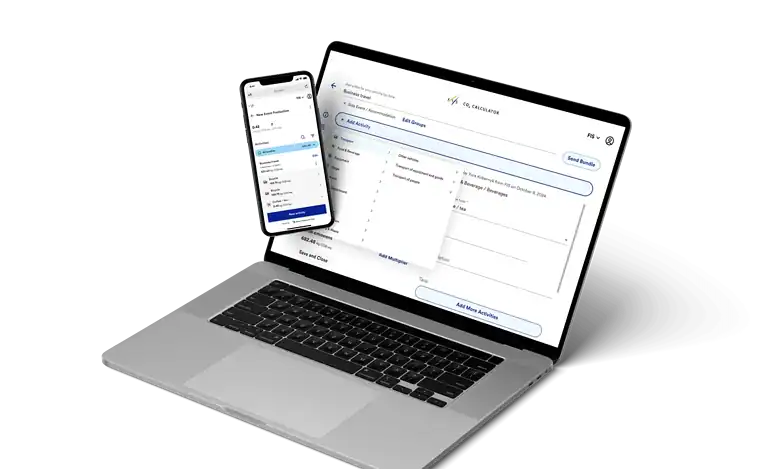
FIS’s current climate-action information offers a relevant example of measurement being given a defined role. Its CO₂ Calculator is presented as a free tool for National Ski Associations and Local Organising Committees, guided by the GHG Protocol. FIS also publishes a Carbon Action Plan and describes work to improve how emissions are tracked.
An event calculator is not a product certification and does not establish the impact of a jacket, ski or binding. The transferable lesson for the winter supply chain is narrower: decisions become clearer when the scope, method and evidence are visible.
Ask what the claim actually covers
Begin with the object of the statement. Does it refer to one material, an entire product, a factory, a collection or the company? A buyer should be able to identify that boundary without interpreting several pages of promotional language.
Ask what is excluded as well as included. A recycled component does not automatically describe the whole item, while a factory initiative may not cover every supplier involved in production. Clear boundaries allow a useful discussion without dismissing a genuine improvement or overstating it.
Record the answer in the buying notes. If the statement will later appear on a shelf label or product page, the sales team needs the same scope the buyer understood. A precise claim can become misleading when shortened carelessly during the move from supplier presentation to retail copy.
Separate a target from a result
A future goal can show direction, but it is different from a completed change. Ask whether the information describes an intention, a programme under way or a measured outcome. Keep those categories separate in internal comparisons.
For a reported improvement, establish the baseline and period. A reduction is difficult to assess without knowing what it is compared with and whether the boundaries remained consistent. If the method changed, ask the supplier to explain how that affects the comparison.
Do not assume that an impressive number is automatically relevant to the product decision. The useful question is what it helps the retailer understand. A smaller, clearly explained change may be more informative than a larger figure presented without context.
Build an evidence file staff can use
A buying team does not need to reproduce a supplier’s entire reporting system. It does need a reliable route to the evidence supporting statements it intends to repeat. Keep the source, date, product scope and any important qualification together.
Make that information accessible to the people writing product descriptions and advising customers. A claim should not depend on one buyer remembering a conversation from a trade show. If the evidence is not ready, mark the wording for follow-up rather than treating it as settled.
Assign responsibility for reviewing the file when a product or statement changes. Last season’s information may remain useful, but it should not be copied automatically onto a different model. The process should make it easier to notice a change in material, supplier or stated coverage.
Include durability and support in the discussion
Material composition is only one part of a product’s ownership story. Ask about care instructions, replaceable components, repair routes and the support available after the initial sale. These are practical questions a retailer can connect directly to the customer experience.
A clear service route does not prove a universal environmental benefit. It does, however, tell the buyer how the product can be supported. Keep that distinction visible and describe the concrete provision rather than substituting an unsupported conclusion.
Bring the service team into the buying review. They may know which parts are repeatedly requested, which instructions confuse customers and which supplier processes work well. That experience can improve a purchasing decision alongside the information in a sustainability presentation.
Use consistent questions across suppliers
A short common questionnaire can make meetings more productive. Ask each supplier to identify the claim, its scope, the supporting source and the date of the evidence. Add product-specific questions where necessary, but keep the central headings comparable.
Allow room for uncertainty. A supplier that clearly explains a limitation may provide more useful information than one that offers an absolute answer to every question. The objective is an accurate basis for decision-making, not a form that rewards the most confident language.
Follow up on missing evidence before using the claim publicly. If a statement remains unclear, the retailer can describe the verified product details it does have. There is no need to fill an information gap with a broader phrase simply because the marketing layout has space for one.
Keep event and product measurement distinct
Winter businesses operate across several contexts: retail, travel, events and equipment use. A tool designed for one context can be valuable without answering every question in another. FIS’s calculator should be understood within the audience and purpose stated by FIS.
That discipline also applies to supplier comparisons. Avoid placing figures from different boundaries or methods side by side as though they were directly equivalent. Ask what the numbers represent before deciding whether a comparison is meaningful.
Where a business lacks the expertise to assess a complex claim, seek appropriate specialist input. The buyer can still improve the conversation by identifying what is known, what remains uncertain and which decision depends on the answer.
Make clarity part of the offer
Customers do not benefit from a dense stack of technical documents at the point of sale. They benefit when the retailer has done the work and can give a concise, accurate explanation, with a credible source available for anyone who wants more detail.
For the winter trade, better evidence can therefore improve both purchasing and communication. Ask consistent questions, preserve the important qualifications and connect the information to the product’s actual role. Clearer claims make a stronger foundation for trust than language that asks the customer to take everything on confidence.
Winter Insight trade analysis, researched on 16 November 2026. This is an editorial purchasing framework, not a certification or legal assessment.
Source: FIS’s official climate-action and measurement information.